Scrum At Me / The Daily Scrum · 13 September 2026
There is a phrase rugby absolutely LOVES when the scoreboard becomes inconvenient.
Trust the process.
Lose?
Trust the process.
Finish fifth?
Trust the process.
Lose to a country you’ve literally never lost to before?
Mayne, you simply aren’t sophisticated enough to understand the process.
😭😭😭
And England have now entered the advanced version.
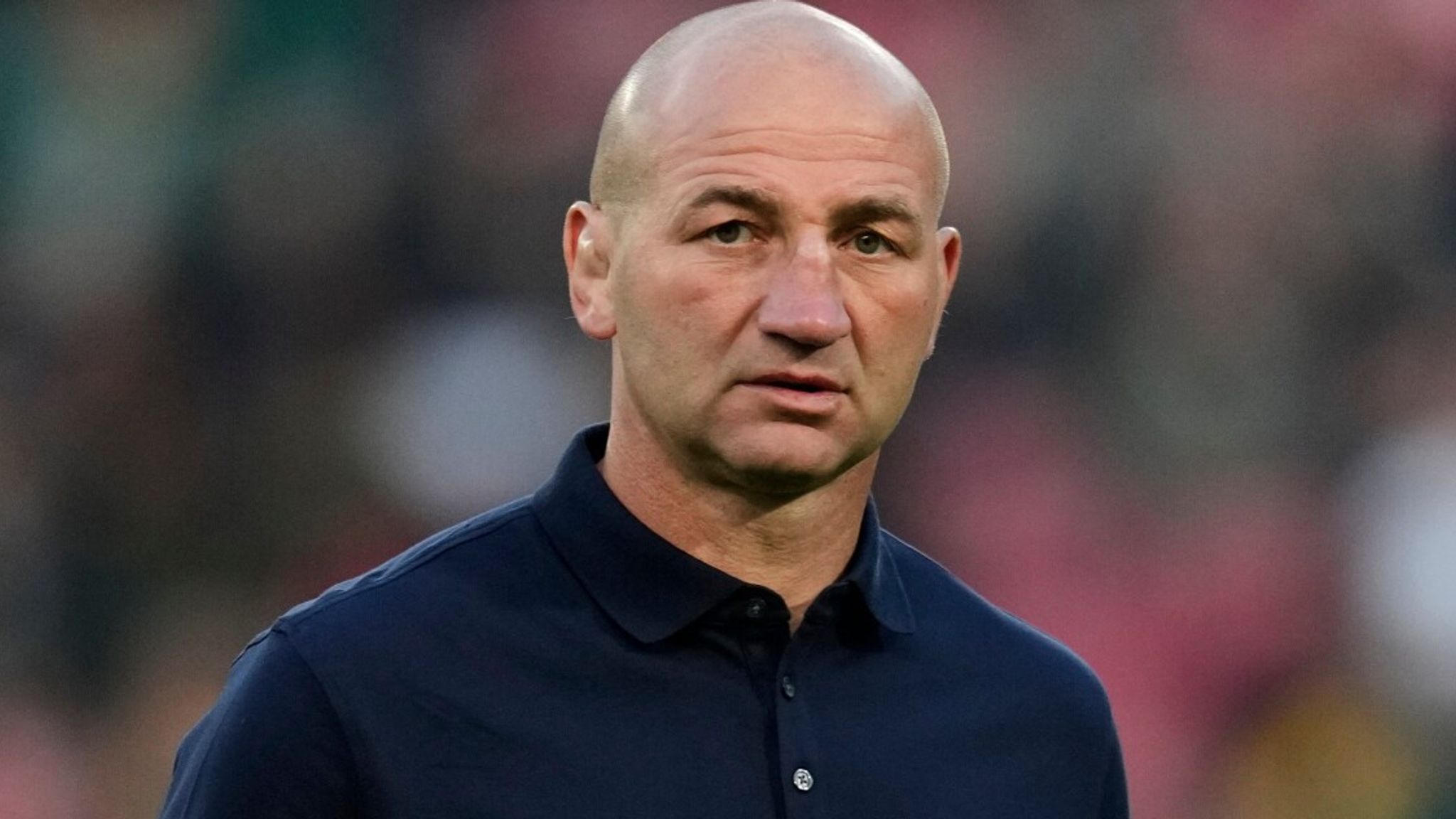
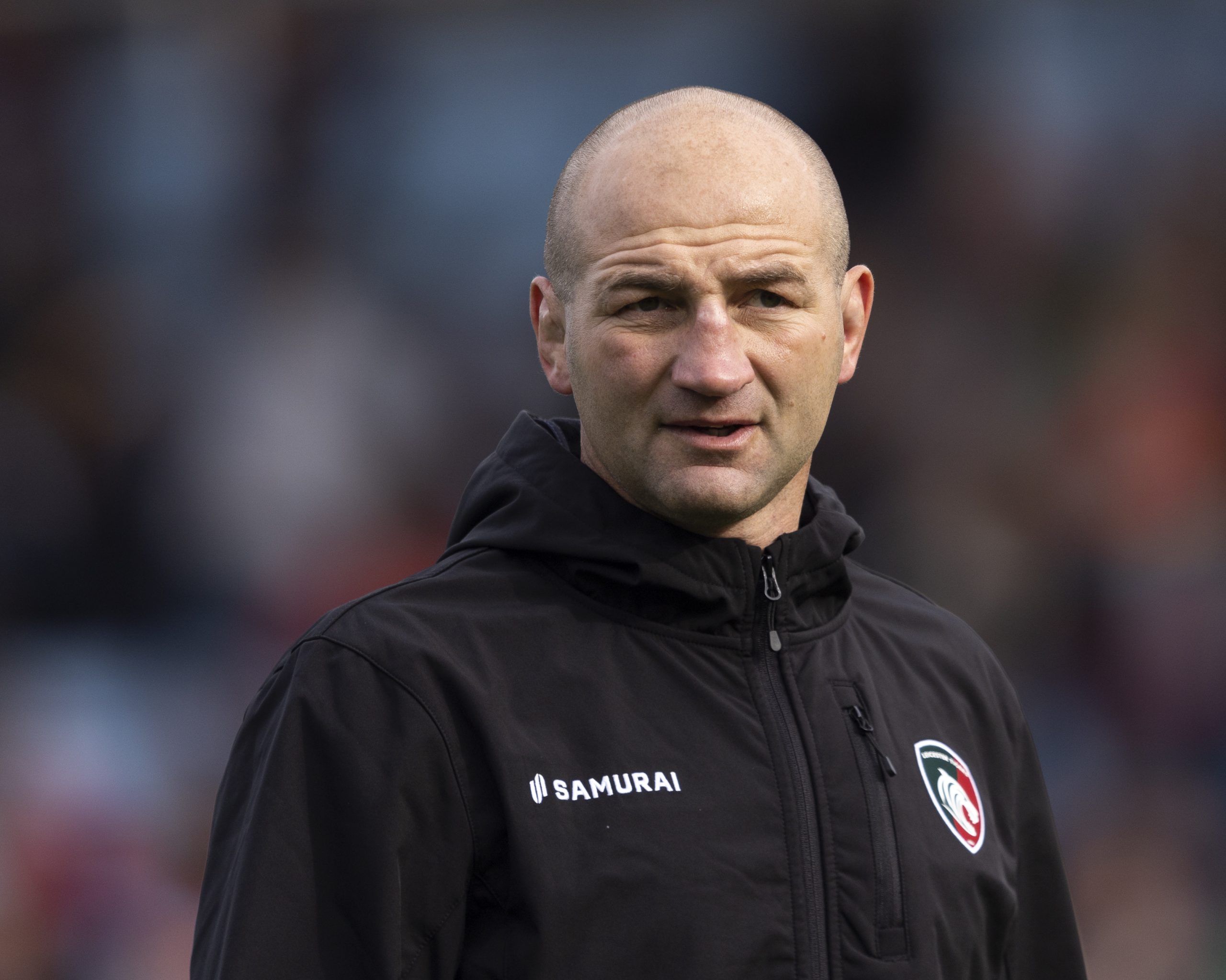
Because after producing their worst Six Nations campaign of the era — one win, four defeats, fifth place and a first-ever loss to Italy — the RFU didn’t remove Steve Borthwick.
They backed him.
Fair enough.
Then reports emerged that they’re preparing to extend him beyond the 2027 World Cup and into 2028.
Nahhh.
At some point “stability” has to meet results in a car park and exchange identification.
Because while England are explaining why failure requires more certainty, South Africa just spent a month doing the opposite.
The Springboks lost Test One to New Zealand.
Then won the next three.
33–26.
29–24.
43–28.
Series?
3–1.
Baltimore?
Six tries.
Rugby’s Greatest Rivalry?
Claimed.
That’s the comparison.
Not England versus South Africa as countries.
Not “everyone copy Rassie.”
It is something simpler:
How do major rugby nations respond when things go wrong?
One side keeps explaining the plan.
The other side changes the scoreboard.
FIRST: ENGLAND’S SIX NATIONS WASN’T “DIFFICULT”
It was bad.
We need to remove the corporate vocabulary here.
England didn’t have a “challenging campaign.”
They finished fifth out of six.
One win.
Four losses.
Eight competition points.
Their single victory was a 48–7 demolition of Wales.
Excellent.
Then:
Scotland 31–20 England.
Ireland 42–21 England at Twickenham.
Then the one that changes the entire conversation:
Italy 23–18 England.
Italy’s first-ever Test victory over England.
Ever.
Then England somehow produced the most England ending imaginable by scoring 46 points in Paris and still losing.
France 48–46 England.
Four straight defeats after opening weekend.
First one-win Championship campaign since 1987.
Worst Six Nations-era finish.
And the RFU’s conclusion?
We’re all behind Steve.
That’s not us paraphrasing some leak.
RFU chief executive Bill Sweeney publicly backed Borthwick and his staff through the 2027 World Cup after the post-tournament review.
Then came the next layer.
Reports this week say the RFU is preparing to extend Borthwick’s deal to around mid-2028.
Past the World Cup.
Performance director Conor O’Shea’s explanation makes administrative sense: you don’t want coaches entering a World Cup already searching LinkedIn for their next job.
Fine.
We understand the theory.
But the theory becomes very funny when you’re extending the man immediately after one win from five.
NOW PUT THAT NEXT TO NEW ZEALAND
And this is where the comparison gets uncomfortable.
New Zealand just lost a series 3–1 to South Africa.
Dave Rennie has spoken about progress.
The All Blacks insist they are heading in the right direction.
And yes, if you only look at “3–1”, you could start warming up the same jokes.
But here’s the difference.
New Zealand lost a competitive series against the benchmark team in world rugby.
England finished fifth in the Six Nations.
The All Blacks beat South Africa 33–16 in the opening Test.
The series aggregate eventually finished only 121–111 to the Springboks.
New Zealand were still alive deep into the Baltimore finale before the Boks ripped the match away late.
England?
England lost to Italy.
For the first time.
Those are not the same category of failure.
So when New Zealand says “we’re progressing,” we may laugh at some of the language, but we can at least identify the evidence.
They beat the Boks once.
They remained competitive.
They have attacking quality.
They lost to the best side in the world.
England’s explanation requires substantially more imagination.
AND THAT’S THE REAL POINT
Rugby unions have fallen in love with process language.
Alignment.
Continuity.
Long-term planning.
Performance environments.
Pathways.
Stability.
All useful.
Until the scoreboard starts asking questions nobody in the boardroom wants to answer.
South Africa know all about process.
Rassie Erasmus might be one of the most obsessive process coaches the game has produced.
But his process is visible because it eventually spits something out the other end.
World Cups.
Series wins.
Selection changes.
Tactical changes.
Players getting promoted.
Players getting dropped.
Problems corrected inside seven days.
The Boks lost 33–16 at Ellis Park.
They didn’t issue an eight-month strategic review.
They had another Test the following Saturday.
They won it.
Then won again.
Then scored 43 points in Baltimore.
That’s why “trust the process” sounds different when Rassie says it.
There are receipts attached.
NOW COURTNEY LAWES ENTERS THE CHAT

This might be our favourite part.
England have just finished fifth.
They’ve lost four of five.
They’ve suffered a first-ever defeat to Italy.
And Courtney Lawes — 105 Test caps — says:
I’m available.
The man came out of international retirement.
He’s back in England with Sale.
He wants another shot.
He’s 37.
He will be 38 at the World Cup.
And England’s response?
Essentially:
Prove yourself.
😭😭😭
To be precise, the language came from assistant coach Richard Wigglesworth, not Borthwick.
Wigglesworth’s point was perfectly reasonable:
If you select Lawes or Joe Marchant, somebody else has to lose a place, so they must go “over and above.”
Fair.
International jerseys are not retirement gifts.
Courtney Lawes should not get picked because everybody remembers Twickenham compilations from 2019.
But there’s still something deeply funny about the situation.
England just finished fifth.
And one of England’s most decorated modern forwards is the one being told:
Show us what you’ve got.
Mayne.
What exactly has everybody currently inside the building shown us?
THIS IS WHERE THE BOK COMPARISON BECOMES INTERESTING
South Africa do not worship youth for the sake of youth.
They also don’t worship experience for the sake of experience.
They use whoever can still contribute.
Damian de Allende is 34.
Siya Kolisi has been around forever in professional-rugby terms.
Eben Etzebeth is not being moved aside because somebody discovered a 22-year-old with excellent GPS numbers.
The question is:
Can you still help us win?
If yes?
Play.
If no?
Next man.
That distinction matters.
Because there’s a bizarre modern coaching obsession with pretending every World Cup cycle starts by deleting everyone over 30 from the spreadsheet.
Rassie doesn’t treat age like a criminal record.
He treats output as the test.
And that is why the Lawes situation deserves scrutiny.
Not:
“LAWES MUST PLAY.”
That’s lazy.
The real question is:
How closed can England’s door possibly be after finishing fifth?
If a 105-cap Lion comes back and is still genuinely better than the man in front of him, pick him.
If he isn’t?
Don’t.
But after the Six Nations England just produced, nobody should be protected by the phrase “incumbent.”
Every chair should be movable.
THEN AMERICA WALKED INTO THE STORY
This part is almost too perfect.
One day after South Africa and New Zealand packed 68,173 people into M&T Bank Stadium in Baltimore, rugby started asking the obvious question again:
Can America become a serious rugby market?
World Rugby thinks there’s an opportunity.
CEO Alan Gilpin has openly discussed the possibility of taking major Six Nations fixtures to the United States.
And England?
Apparently very unlikely.
Why?
Money.
Of course.
A Twickenham Six Nations match is reportedly worth around £10 million.
And men’s fixtures at Twickenham account for approximately 85% of RFU revenue.
EIGHTY-FIVE.
Now suddenly everybody understands “tradition.” 😭
TO BE FAIR TO ENGLAND — £10 MILLION IS £10 MILLION
This isn’t one of those arguments where we pretend England are stupid.
They’re not.
Twickenham — sorry, Allianz Stadium if we’re keeping the sponsors happy — is an economic machine.
The RFU owns the stadium.
There are naming-rights commitments.
Debenture holders.
Season-ticket expectations.
Commercial contracts.
Supporters who have paid money specifically for these fixtures.
Moving a Six Nations home match to America isn’t simply changing the location on Google Calendar.
You’re potentially surrendering one of your most valuable revenue events.
So England’s reluctance makes commercial sense.
That’s the fair side.
Now here’s the ScrumAtMe side:
Everybody wants America to become a rugby market until somebody has to actually take a rugby match to America.
😭😭😭
SOUTH AFRICA AND NEW ZEALAND JUST DID IT

Baltimore was not Cape Town.
Not Auckland.
Not Johannesburg.
Not Wellington.
They took one of rugby’s biggest rivalries and put it inside an NFL stadium.
Result?
68,173.
Reported North American rugby-union attendance record.
Massive visibility.
A serious American market test before the 2031 Rugby World Cup.
And financially?
Published numbers vary, so we’re not going to pretend we audited SARU’s bank account.
But every serious report agrees on the broad point:
There was substantial commercial upside.
That’s the part that matters.
South Africa and New Zealand took the risk.
America showed up.
Now World Rugby is saying:
Maybe we can do more of this.
England are saying:
Yes, excellent idea.
Just not with our £10 million.
😭
AND MAYBE ENGLAND ARE RIGHT
That’s what makes this interesting.
Ireland versus Italy in America may make more sense.
Large Irish communities on the east coast.
Different home-stadium economics.
Ireland has already demonstrated willingness to take major rugby properties into the American market.
You don’t need England for every international-growth experiment.
But Baltimore has shifted the argument.
Before Baltimore, people could say:
Will Americans actually come?
Now we have an answer.
68,173 of them did.
So the question has changed.
It’s no longer:
Can elite rugby sell in America?
It’s:
Who is willing to move the inventory?
And England, for now, looks like the union protecting the home gate.
Again — possibly rational.
But don’t then give us twenty PowerPoints about global growth.
Somebody has to leave home.
THREE ENGLAND STORIES. SAME BIGGER QUESTION.
At first glance, Borthwick, Lawes and an American Six Nations match look like three separate stories.
They’re not.
They’re all about risk.
England won’t risk coaching instability before the World Cup.
England won’t risk handing a jersey back to Courtney Lawes without domestic proof.
England won’t risk approximately £10 million by moving a home Six Nations match away from Twickenham.
Everything is cautious.
Everything is controlled.
Everything protects the existing structure.
And then there is South Africa.
The Boks lost Test One?
Change things.
Young player deserves an opportunity?
Give it.
Veteran still performs?
Keep him.
Take New Zealand to Baltimore?
Fine.
Put a major rivalry into a new market?
Let’s see what happens.
Sometimes it fails.
Rassie has made selections that look insane.
He’s experimented and lost.
He’s been criticised.
But the South African operation increasingly behaves like a team confident enough to test itself.
That is the difference.
ENGLAND ARE PROTECTING THE PROCESS
South Africa are testing theirs.
That’s the line.
Because Borthwick’s supporters are not necessarily wrong to argue for continuity.
Changing head coaches every time England lose would be ridiculous.
Borthwick has also won 28 of 48 Tests.
He led England to a World Cup semi-final in 2023.
There is a body of work beyond five bad matches.
But you cannot look at the 2026 Six Nations and call it anything other than a major failure.
And when failure is immediately followed by greater job security, supporters are entitled to ask:
What exactly would have triggered consequences?
Third?
Fourth?
Fifth clearly didn’t.
First loss to Italy clearly didn’t.
One win clearly didn’t.
So where is the line?
That’s not abuse.
That’s governance.
AND THE LAWES QUESTION MAKES THAT EVEN LOUDER
If England’s coaching staff deserves patience because of previous work…
Why doesn’t Courtney Lawes’ previous work buy him anything except another audition?
Again — we aren’t saying pick him automatically.
We’re saying apply the logic consistently.
The coaches want their full body of work considered.
Fine.
So does a 105-cap player.
Then let current performance decide both.
That’s merit.
Not reputation.
Not age.
Not executive stability.
Output.
RASSIE’S BIGGEST ADVANTAGE ISN’T THE BOMB SQUAD
It’s accountability.
A bad week changes something.
Selection.
Shape.
Role.
Plan.
Not always everything.
But something.
That’s why the Bok–All Black series matters to this England conversation.
South Africa got hammered in Test One.
Seven days later they were better.
Seven days later they won again.
Then they ended the series with 43 points and six tries.
That’s a process you can see.
England’s next challenge is proving theirs exists somewhere outside a board review.
Because 2027 is coming whether the contract says 2028 or not.
THE DAILY SCRUM VERDICT
Should Steve Borthwick have been fired immediately after the Six Nations?
No automatic case.
Should England supporters question an extension after one win from five and fifth place?
Absolutely.
Should Courtney Lawes receive a ceremonial England jersey because he has 105 caps?
No.
Should every England place be genuinely vulnerable after that campaign?
Obviously.
Is England wrong to protect a home Test worth roughly £10 million?
Not necessarily.
Can you preach global rugby expansion while refusing to surrender any of your own premium inventory?
Now that’s the interesting question.
And what about New Zealand?
They lost 3–1 to South Africa.
They can talk about progress because parts of the series genuinely showed it.
England finished fifth and lost to Italy.
That’s a very different sales pitch.
Then there are the Springboks.
South Africa lost the opening Test.
Their response wasn’t:
Trust us.
It was:
33–26.
Then:
29–24.
Then:
43–28.
That is the whole argument.
You can have the greatest process document ever written.
Eventually somebody turns on the scoreboard.
Cameras off.
England are extending the coach.
Courtney Lawes is proving himself.
Twickenham is protecting the £10 million.
The All Blacks are talking progress.
And the Springboks?
They’re still holding the trophy. 😭🇿🇦
At some point, “trust the process” has to become:
LOOK AT THE RESULTS.
You decide.
THE DAILY SCRUM
Real rugby news. Weaponised into comedy.
ScrumAtMe — Comedic Technical Analysts.